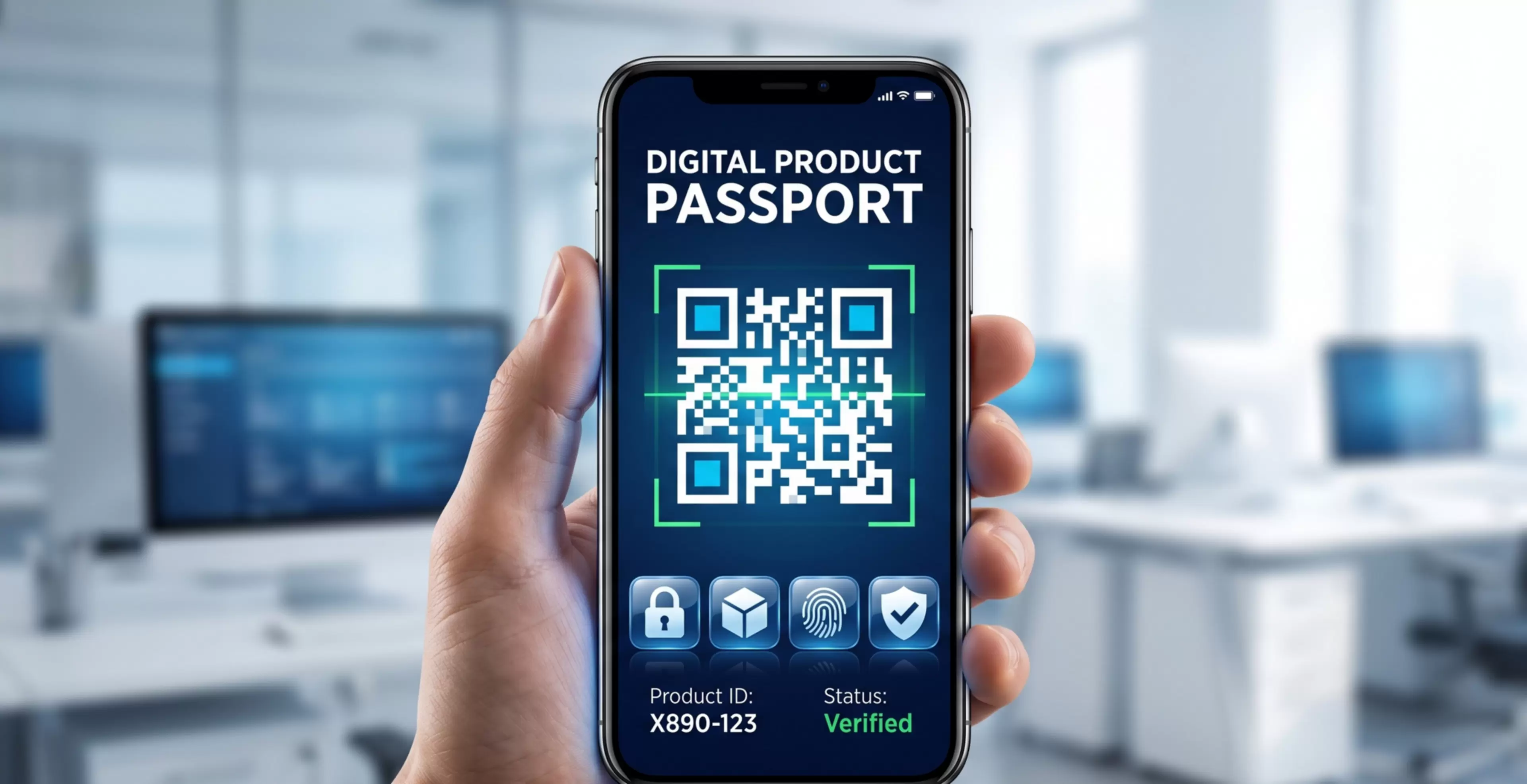
With the Ecodesign for Sustainable Products Regulation (ESPR) (Regulation (EU) 2024/1781), the European Union aims to make sustainable products the norm. The regulation entered into force on 18 July 2024, and replaces the old Ecodesign Directive 2009/125/EC and extends the scope of application to almost all physical products sold in the EU. This will also include electronic devices like printers and multifunctional devices. The focus is on issues such as durability, repairability, energy efficiency, recyclability, material efficiency, and the long-term availability of replacement parts and software updates. But the regulation alone is not enough. To ensure transparency regarding these requirements throughout the entire product life cycle, the EU is relying on the Digital Product Passport (DPP). But what exactly is behind the concept of the Digital Product Passport, and what could it mean for products such as multifunction systems and printers in the future?

Central criteria of the Ecodesign for Sustainable Products Regulation (ESPR)

The Ecodesign for Sustainable Products Regulation (ESPR) is part of the European Green Deal, with which the European Commission wants to transform the European Union into a competitive and climate-neutral circular economy. To achieve this, the Ecodesign Regulation sets out minimum criteria that a product must meet in order to improve its recyclability and energy efficiency. It applies to all physical goods placed on the market or put into service within the EU.

To reduce the environmental impact of products, the Ecodesign Regulation requirements focus on improving the following product characteristics:

1.

Functional durability

2.

Reliability

3.

Reusability

4.

Retrofittability

5.

Repairability

6.

The possibility of maintenance and repair

7.

The presence of substances of concern

8.

Energy consumption and energy efficiency

9.

Water use and water efficiency

10.

Resource use and resource efficiency

11.

Recycled material content

12.

The possibility of reprocessing

13.

Recyclability

14.

The possibility of recovery of materials

15.

Environmental impact, including carbon footprint and environmental footprint

16.

Amount of waste expected to be generated

Furthermore, the ESPR stipulates that products may only be placed on the market if they have a Digital Product Passport (DPP). Although the ESPR is already in effect, the DPP will only be introduced gradually, starting with iron and steel in 2026. By 2029, it will then be gradually introduced to other areas such as energy-related products, textiles, tires and aluminum, furniture, mattresses and ICT products.


What is the Digital Product Passport (DPP)?

The DPP provides an easy-to-use way to connect a physical product to the digital record behind it. It shall enable customers, repair shops, recyclers, government agencies, and other stakeholders to access comprehensive digital information, such as:

  • Origin and Country of Manufacture
  • Supply Chain Information
  • Material Composition
  • Sustainability and Environmental Data (e.g., energy efficiency)
  • Repair and maintenance options
  • Take-back systems, recycling, and disposal instructions
  • Refurbishment programs
  • Replacement parts and software updates
  • Proof of compliance

Depending on the target audience, different information in the DPP may be accessible to different stakeholders. For example, consumers may have access to information on repair options or material composition, while recyclers may be able to access more detailed information on materials and recycling. Competent authorities may have access to additional compliance-related information market surveillance and enforcement purposes.

The Digital Product Passport (DPP) is based on a Europe-wide digital ecosystem consisting of unique product identifiers, decentralized product information, a central EU registry, and search and information portals. Depending on the product and use case, the information can be accessed via various data carriers such as QR codes, NFC tags (Near Field Communications), or RFID-Tags (Radio Frequency Identification) that are linked to the respective product. Which data carrier a manufacturer uses will depend on factors like the product type, durability requirements, cost, and industry-specific technical requirements. QR codes are widely expected to be a popular choice because they’re inexpensive and most people can scan them with a standard smartphone.

Other regions of the world, including China, Australia, and several U.S. states, are currently pursuing similar approaches.

The Benefits of the Digital Product Passport

The goal of the DPP is to create transparency across the entire value chain and, in particular, to improve the traceability of supply chains. In the future, sustainability information should be verifiable and, as far as possible, independently verified. This will provide customers, companies, and government agencies with a significantly better foundation for making informed decisions. It is therefore also a tool to prevent greenwashing.

The DPP’s greatest value lies in its contribution to the circular economy. The goal is to extend the useful life of products, facilitate their repair and reuse, and reduce waste. The DPP supports this by providing information on repair options, take-back systems, refurbishment programs, resale options, replacement parts, and service and maintenance offerings.

Furthermore, product identifiers linked to the DPP can support product authentication and traceability. This can help make the origin and authenticity of products more traceable and make it easier to detect counterfeits. This could play an important role in the future, particularly for high-value products or consumables. For manufacturers, this means additional protection for their brands and greater security for customers.The DPP can also create opportunities for companies themselves. Bringing together product data from across the value chain can provide a better understanding of their own products, help identify potential efficiencies, and support more informed product decisions. And companies may not need to start from scratch: Much of the required information for the DPP already exists today in various systems. Product names, SKUs, barcodes, safety data sheets, packaging information, and supplier data are often already available. The real challenge lies in consolidating this information and making it usable in a meaningful way. The process often begins with just a few basic data points. Over time, additional information, such as sustainability data, material information, or supply chain details, can be added.

What the Digital Product Passport Means for Printers and Multifunction Systems

Printers and multifunction systems, as part of ICT products, must bear the DPP starting in 2029. EU sources estimate that the final delegated act for imaging equipment (which will set out the exact rules for this sector) will be published in 2028.

For workplace technology buyers, this means MFPs and printers will soon have a digital identity that can be accessed via a product-specific digital identifier. Depending on the implementation, this could take the form of a QR code, an NFC tag, or RFID tag that provides access to verified lifecycle and product information. Instead of relying on marketing claims, buyers will be able to access transparent data on expected device lifetimes, repairability scores, recycled content, energy performance, the availability of updates and spare parts, carbon footprint information, and end of life instructions.Even before the ESPR took effect, the Battery Regulation (EU) 2023/1542 introduced a sector-specific form of the DPP: the battery passport. The battery passport will apply to most batteries categories in the EU starting in February 2027 and is considered a pioneer for many DPP concepts. At the same time, the example of the battery passport illustrates just how nuanced the regulations are. While the Battery Regulation is, in principle, also relevant to multifunction systems and printers, the requirement to provide a battery passport does not apply to the button cells used in these devices.

What This Means for Businesses Buying MFPs and Printers

Procurement becomes more transparent and more accountable:

The arrival of the Digital Product Passport will fundamentally change how organizations evaluate workplace technology. Procurement teams will be able to compare MFPs and printers based on verified sustainability and lifecycle data, making it easier to select products that align with internal ESG goals and external reporting obligations. For many organizations, ESPR and DPP will become part of their governance responsibilities, influencing tender specifications, supplier selection, and total cost of ownership calculations.

Devices will last longer and be easier to repair:

ESPR’s focus on durability and repairability means MFPs and printers will be designed to stay in service for longer periods. Manufacturers will need to guarantee spare parts availability for defined timeframes and ensure devices can be disassembled and maintained more easily. This shift directly supports lower total cost of ownership and reduces the environmental impact associated with frequent device replacement cycles.

Requirements for Consumables:

This includes cartridges along with toner or dry ink, substrates/media (such as paper, cardstock, synthetic film, or label materials etc.), waste toner/dry ink bottles; and consumable service items or spare parts such as Photoreceptor Drums, Fuser Units Rollers and Belts etc. Toner Cartridges, for example, are likely to evolve significantly under ESPR, potentially with defined minimum page‑yield standards, improved access for remanufacturing, and clearer sustainability information — all contributing to reduced waste, lower costs, and a more circular consumables ecosystem.

Konica Minolta Welcomes the Digital Product Passport

Konica Minolta pursues a circular economy approaches aimed at extending the useful life of products and materials and promoting their reuse, remanufacturing, and recycling. We welcome the ESPR and Digital Product Passport, which support transparent sustainability information that gives consumers an impartial third-party view of these credentials for better informed choices. For manufacturers, it means greater responsibility. For businesses it provides access to clear lifecycle data that supports ESG reporting, details on repairability and device lifetimes, clear information on sustainable consumables, and easily accessible details on the footprint across the product lifecycle.

The next few years will redefine the relationship between organizations and the devices they rely on every day. ESPR and the DPP are not simply regulatory changes; they are catalysts for better design, better data, and better decisions.

Share: