Resources and circular economy

We're shaping a circular economy by reducing, reusing and recycling
Plastic waste represents a vast squandering of precious raw materials and natural resources, as well as needless consumption of energy and release of greenhouse gas emissions into the atmosphere. A significant amount of plastic waste still goes to landfills or gets burned – a trend that by 2050 could account for 20% of global oil consumption and 15% of global annual greenhouse gas emissions.
We believe that products can be designed from the outset to help cut waste and emissions over their lifetimes. Therefore, we have set a goal to make our products from more than 90% circulated resources (recycled materials and biomaterials) by 2050 (“towards zero natural resources”). We also aim to enable the reuse and recycling of materials as many times as possible. Part of that involves accelerating initiatives for the recovery and recycling of end-of-life products and packaging materials.
We're reducing the use of primary resources
We aim to reduce the use of primary resources as far as possible.
Recycled materials in print devices and toner bottles
Our current office devices consist up to 38.6% of recycled plastic1 (or up to 40.4% according to German Blue Angel mark) and our production printing devices up to 31.9% of recycled plastic.2
Konica Minolta’s toner bottles are up to 60% made of recycled plastics.3
1 according to calculation based on EPEAT as of 11/2025
2 according to calculation based on EPEAT as of 11/2025
3 As of September 2024
Lighter product design
By making our printing devices lighter, we reduce the use of raw materials, energy consumption during production and transport, and the environmental impact of disposal. That's why we're continuously working to reduce the size and weight of our office and production printing devices while improving their performance. For example, the weight of the AccurioPress C7100 digital printing system has been reduced by approximately 24% compared to the predecessor.
Printing on recycled paper
All our bizhub devices offer trouble-free processing of recycled paper that meets EN 12281 (the European standard for copy paper for dry toner imaging processes).
Reducing paper consumption
Our printing devices offer features and settings to help users print in more resource-efficient ways.
- Duplex (double-sided) printing and the N-up function (to print multiple pages on a single sheet) help save consumables and energy.
- Defaulting to monochrome printing, using colour only when truly necessary.
- Automatic deletion of blank pages during copy and scan processes avoids waste.
- Follow-Me Printing means a user must actively decide whether a document needs printing. This prevents unnecessary reheating cycles and wasteful 'forgotten' printouts.
- Saving copy programmes as favourites or using existing templates (like ID card copy) helps ensure direct selection of the correct settings, which minimises misprints and the associated waste.
Reducing waste in production
All Konica Minolta factories are working under a certified ISO 14001 Environmental Management System. Additionally, Konica Minolta has developed an own factory certification system, which is applied to own and main supplier’s factories. As part of this, Konica Minolta has implemented a variety of measures to reduce and recycle waste generated in the manufacturing. Focus areas include reducing the amount of waste discharged to plastic mill ends; reducing wastewater discharge; and cutting packaging waste. This process has cut waste substances by 1,287 tonnes in FY2024 compared to the previous FY2023.
Cutting packaging waste during transportation
Although styrene foam is widely used, it has a poorer environmental performance than other materials. which is why we've been looking for packaging solutions to replace it. In 2019, for transport from our factories to Europe, we developed an air cushioning material for packaging and transporting MFPs. Using the lighter, more compact air pillows enables us to reduce the weight of shipments by 70% and the packaging volume by 84% compared to our previous packaging. In addition, we're committed to the use of cardboard. In some cases we've more or less eliminated packaging. Units shipped from the European warehouse in Emmerich to our European customers are simply shrink-wrapped on pallets. As a result, we reduced packaging materials from FY2018 to FY2024 from 26.0 k tons to 18.7 k tons (approx. – 7,300 tons of packaging).
We're reusing end-of-life products and consumables
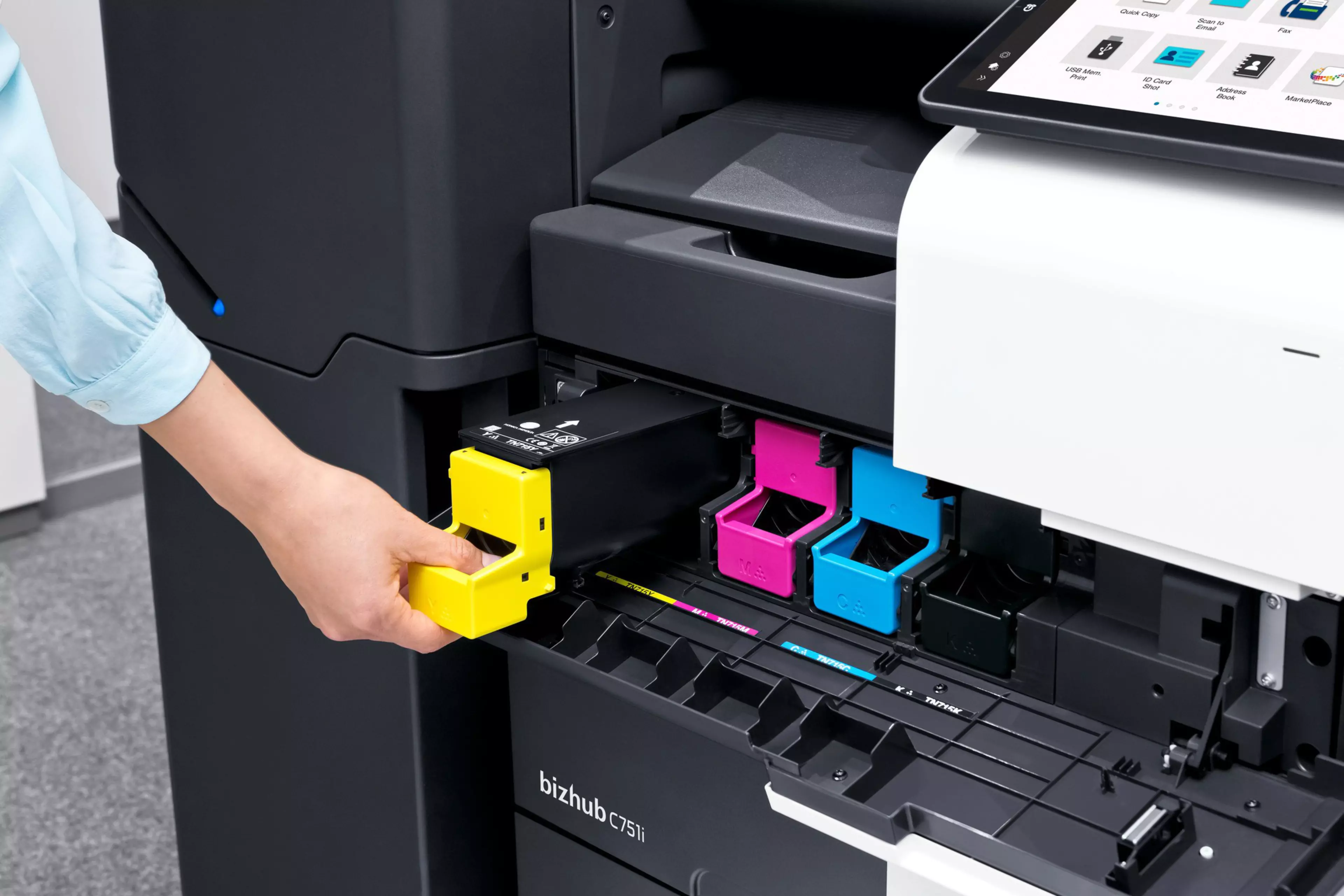
We aim to reuse end-of-life products and consumables as far as possible. Across Europe and Japan, we can refurbish and refill toner bottles. And throughout our European operations, print devices are cleaned and reused for at least another four or five years after their first use-cycle, instead of being disposed of.

Giving bizhub MFPs a second life: bizhub Refreshed
Our bizhub Refreshed programme gives customers in Europe access to affordable, high-quality refurbished bizhub MFPs. Our consistent, standardised Europe-wide process ensures the refurbished devices deliver high levels of performance and quality, while offering resource and greenhouse gas (GHG) emission savings compared with the production of new devices.
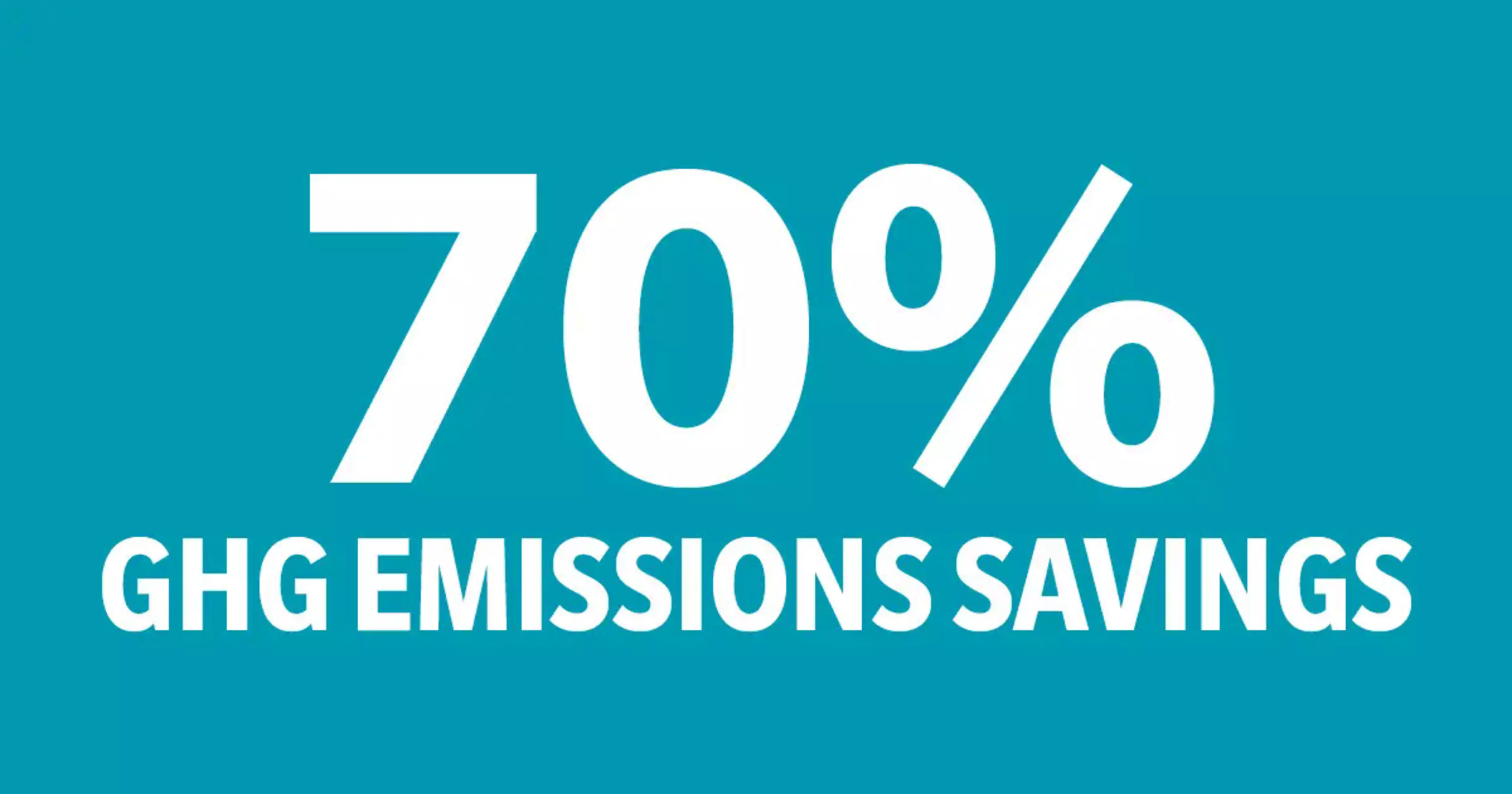
A bizhub Refreshed device offers savings of at least 70% in greenhouse gas (GHG) emissions (depending on the device) compared with production of a new device.*
* The figures are based on assumptions and follow the "Greenhouse Gas Protocol Product Life Cycle Accounting and Reporting Standard" (GHG Protocol), carried out by ClimatePartner
We're recycling materials
We aim to enable the recycling of materials as many times as possible.
Recycling and Return Programs for Konica Minolta Consumables
A lot of printing consumables are classed as electronic waste which must be disposed of in a regulatory compliant way. Konica Minolta supports the collecting and return for the bizhub, AccurioPrint and AccurioPress series of office and production printing systems through locally organized solutions in 23 European countries. Pickup processes, available return options, logistics partners, and accepted items may vary by country.
Recycling office print devices

We aim to recover and recycle the office equipment we sell worldwide. In FY2024, we recycled 99.3% of the 14,300 tons of end-of-life office equipment recovered in Europe, Japan, China and the US.
Facilitating paper recycling with advanced toners
For printed materials to become part of the circular economy, toner must be easily removable from paper that's to be recycled. The de-inkablility of Konica Minolta’s Simitri® toners has been confirmed by INGEDE e.V. (International Association of Deinking Industry). De-inking contributes to closing the paper loop, improving recycling and reducing water pollution.

Find out more about our Environmental approach


Download


Find out more about our ESG services:
Our ESG blog articles
Diversity, Equity and Inclusion: Why companies benefit from it

Digital Accessibility: A Key to Inclusion and Equal Opportunity in the Workplace
When boundaries disappear - how healthy is hybrid working for mental health?

Where is the best place to work: in the office or at home and how to reach a compromise between employee and employer wishes?

The EU CSDDD: Responsibility along the supply chain

CSRD reporting for SMEs – in just a few steps with AI
How can you help to reduce or avoid plastic waste?

Three digitalisation initiatives that have a positive impact on an organisation’s sustainability
Can digital transformation be sustainable?
Five ways to clean up your data ‘junk' and save energy

Just how sustainable are data centres and Cloud Services?
Six ways to reduce the environmental impact of your print infrastructure

Corporate responsibility: manage sustainably and ensure a bright future

Sustainable companies: it’s this simple