• Pollution

    PollutionHeroSlider

Cutting air pollution in the office and in the outside world

Air pollution affects both the external environment and the internal working environment. We're committed to avoiding and reducing greenhouse gas emissions to help improve air quality, reduce pollution and create more sustainable workplaces.

We aim to cut pollution and reduce particle emissions as far as possible during:

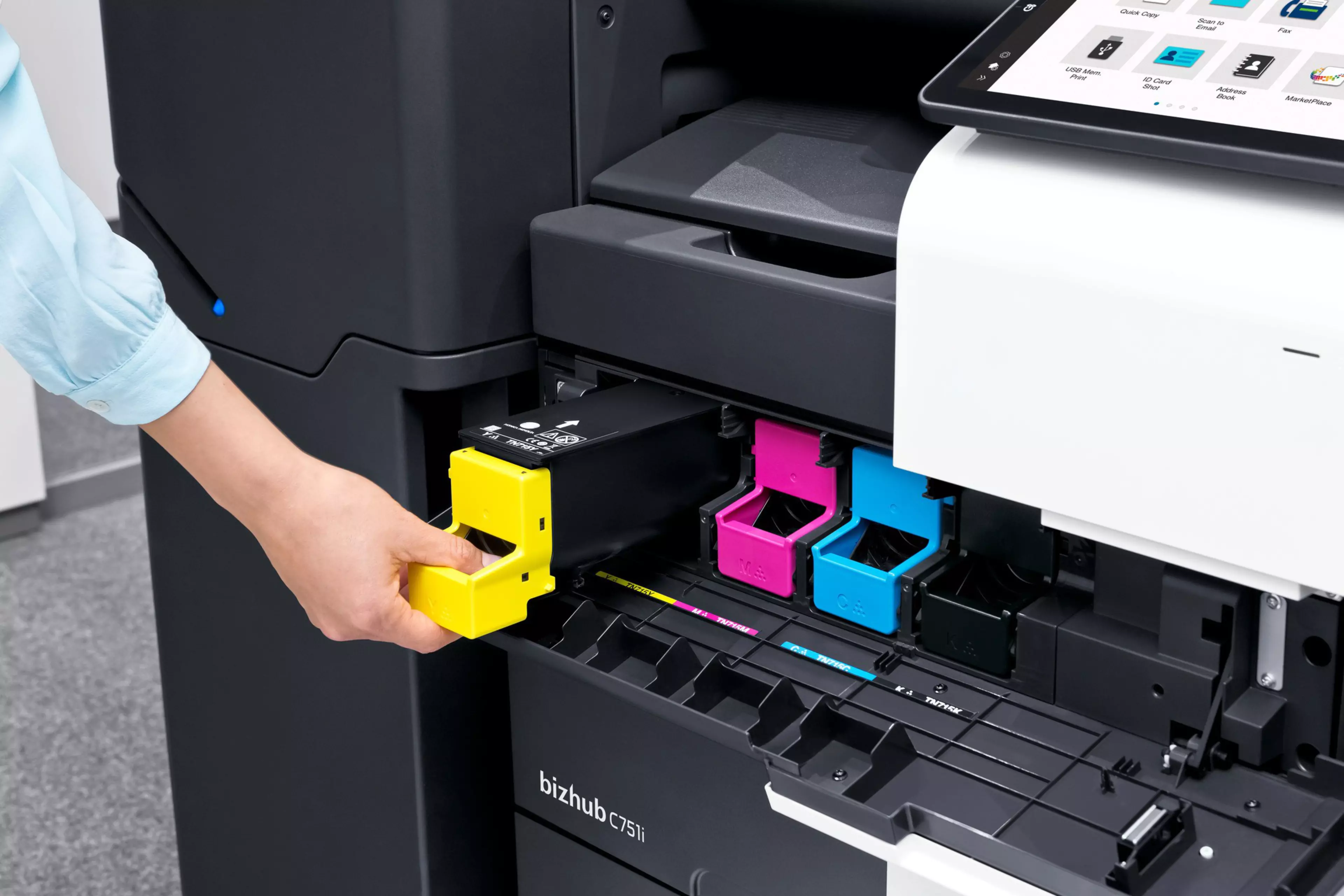
  • Printing device operation, by installing filter devices to reduce particle emissions
  • Transportation, by favouring logistics and transport that have a lower environmental impact

We're striving to reduce particle emissions

Indoor air quality (IAQ) is an important factor linked to better health and wellbeing. There's growing awareness of:

  • The environmental risks arising from chemicals, such as volatile organic compounds (VOCs) emitted by construction materials, cleaning products and office equipment
  • The health impacts of fine particulates, which can present challenges to people with allergies or other health conditions that increase sensitivity to dust and particulates

As part of our commitment to improving our customers’ individual work environments, Konica Minolta has developed effective solutions to help our customers optimise IAQ and create a workplace that's better for everyone's health, comfort and productivity.

Although laser printers may be only one of many sources of odours and emissions in the office environment, we aim to minimise their impact. We've developed dedicated, high-performance filter devices (or air cleaning units) for our office systems that simultaneously:

  • Ensure high particle emission reduction
  • Optimise airflow so that devices work efficiently and reliably

Our air cleaning units last the device lifetime and never need replacing. There are three options:

  • Standard air cleaning unit, fitted as standard to the latest Konica Minolta devices, reducing emissions by at least 90%
  • Optional air cleaning unit, attached to the outside of an office device, reducing emissions by 82%–97%
  • External filter devices (if an air cleaning unit can't be attached to a device), reducing emissions by up to 98%

Find out more about Indoor air quality and our air cleaning units.

Blue Angel validation and ecolabel

Our air cleaning units achieve up to 98% reduction of ultra-fine particle (UFP) emissions, measured according to Blue Angel standard DE-UZ 219. 

Our office systems carry the Blue Angel ecolabel, a voluntary certificate that confirms a product meets additional environmental criteria relating to energy efficiency and low emissions, as defined by the German Federal Environment Agency (Umweltbundesamt).

Blue Angel validation and ecolabel

Indoor Air Quality

The air we breathe is closely linked to our health and wellbeing – and the air at our place of work is likely to affect our comfort and productivity. Konica Minolta is committed to improving people’s working environments in whichever way possible, for instance by offering sustainable and effective solutions that help our customers improve the Indoor Air Quality (IAQ) of their working space by reducing emissions.

We're cutting pollution in logistics and transport 

In our efforts to cut pollution from logistics and transport, we favour shorter distances and transport options that help to reduce greenhouse gas emissions. Where possible, we're trying to shift transport across Europe from air and road to rail and water. Already: 

  • 90% of our goods transported from Rotterdam, Netherlands, to our main warehouse/distribution centre in Emmerich, Germany, travel by barge along the Rhine 
  • 40% of transport from Emmerich to Italy is by rail 

Consolidating European distribution at Emmerich allows us to optimise our logistics facilities and ensure efficient distribution from the factory to the customers. We're also reducing the number of containers we use through improved loading.

Get in touch...

...and contact our Sustainability Team!

Get in touch...

Find out more about our Environmental approach

Our ESG blog articles

Diversity, Equity and Inclusion: Why companies benefit from it
As workplaces evolve to meet the demands of a diverse and dynamic society, embedding Diversity, Equity, and Inclusion (DEI) into every aspect of business is no longer optional; it is essential.
Digital Accessibility: A Key to Inclusion and Equal Opportunity in the Workplace


Creating equal, fair, and fully inclusive working conditions for people with disabilities is essential. Without suitable accessible digital tools those employees may be excluded from key tasks, limiting individual potential and organizational performance. Digital Accessibility is vital for ensuring the workplace supports everyone equally, including people with disabilities.
When boundaries disappear - how healthy is hybrid working for mental health?
Hybrid working has become a common practice due to its flexibility, but how does mixing the home and workspace impact mental health, and what do employers and employees need to do to ensure a positive outcome?
Where is the best place to work: in the office or at home and how to reach a compromise between employee and employer wishes?

Some businesses are increasing pressure on their employees to return to more office-based working, which can be at odds with worker preferences for remote of hybrid working. So, how can a compromise between employers and workers be reached?
The EU CSDDD: Responsibility along the supply chain

Global supply chains are often linked to human rights violations and environmental damage. The new EU CSDDD directive now obliges companies to take responsibility—from raw material extraction to the final product. Find out what the directive means, who it affects, and why it is a crucial step toward greater sustainability and fairness. 
CSRD reporting for SMEs – in just a few steps with AI


The EU's Corporate Sustainability Reporting Directive (CSRD) is designed to standardize sustainability reporting across Europe. But as the number of businesses under its jurisdiction increases, what are the requirements of this regulation and how will it affect your business? In this blog article you will explore how you can use AI technology to ensure reporting according to the CSRD.
How can you help to reduce or avoid plastic waste?
The serious issue of plastic waste needs to be urgently addressed and everyone needs to play their part in reducing the use of plastics. But how can you ensure your organisation uses less plastic?
Three digitalisation initiatives that have a positive impact on an organisation’s sustainability
Which digitalisation initiatives can have a positive impact on sustainability? We want to address this topic in this blog article.
Can digital transformation be sustainable?
The business benefits of digital transformation are clear, but can it also be sustainable in the age of the climate crisis? This is a complex subject that needs careful consideration as many factors play a role.
Five ways to clean up your data ‘junk' and save energy
Digital Cleanup Day 2024 takes place on 16th March 2024 and encourages people and organisations to reexamine their digital world to ensure the infrastructure and systems they use are as well organised and efficient as possible.
Just how sustainable are data centres and Cloud Services?
More and more data is being stored and used in the Cloud and many companies are moving the majority (if not all) of their IT infrastructure into the Cloud.
Six ways to reduce the environmental impact of your print infrastructure


Tackling climate change and the environmental impact is vital and something that everyone can play their part in helping to achieve. Thankfully, there is already a keen awareness of these requirements - according to Quocirca’s Future of Work Spotlight on Sustainability 2025 report (based on the views of 1,021 office workers and 521 IT decision makers), 71% say environmental issues and sustainability will be important or extremely important to their business by 2025.
Corporate responsibility: manage sustainably and ensure a bright future
When companies act sustainably, they have two major advantages. They remain competitive and they reduce costs. Read here how it works.
Sustainable companies: it’s this simple
Everyone can help shape a climate-neutral and sustainable company. Read how you can get started now.